Japanese streetwear, explained without the hype
Short answer: Japanese streetwear is less about logos and drops than about shape and fabric. Its main ingredients are relaxed, often wide silhouettes; heavy, textured cotton; workwear and military details; American casual clothing reinterpreted with obsessive care; and traditional Japanese garments such as haori and sukajan reworked for the street. You can wear it at any age if you start with the shape and keep the graphics quiet.
Where it came from
Japanese street fashion has several roots that grew together over about seventy years.
American casual. After the Second World War, American clothing arrived in Japan through the bases and the second-hand markets: denim, work jackets, college sweatshirts, bomber jackets. Japanese makers and shoppers studied these garments closely, sometimes more closely than the Americans who made them. The term ame-kaji (American casual) is still used for this style.
Souvenir and subculture jackets. The sukajan, the embroidered satin jacket first made for servicemen in Yokosuka, moved from souvenir to youth uniform. We tell that story in Sukajan: how a souvenir jacket became streetwear.
Harajuku. From the 1980s and especially the 1990s, the streets around Harajuku in Tokyo became a stage for young people's own style, from colourful layered looks to the small independent labels of "Ura-Harajuku". Street-style magazines photographed what people actually wore, and that fed back into the shops.
Tradition. Wide trousers, wrap jackets, haori, indigo, boro patchwork and the idea of wabi-sabi, beauty in things that are worn and imperfect, all keep reappearing. Japanese streetwear borrows from its own past as freely as it borrows from America.
What it looks like today
Strip away the hype and five things keep showing up:
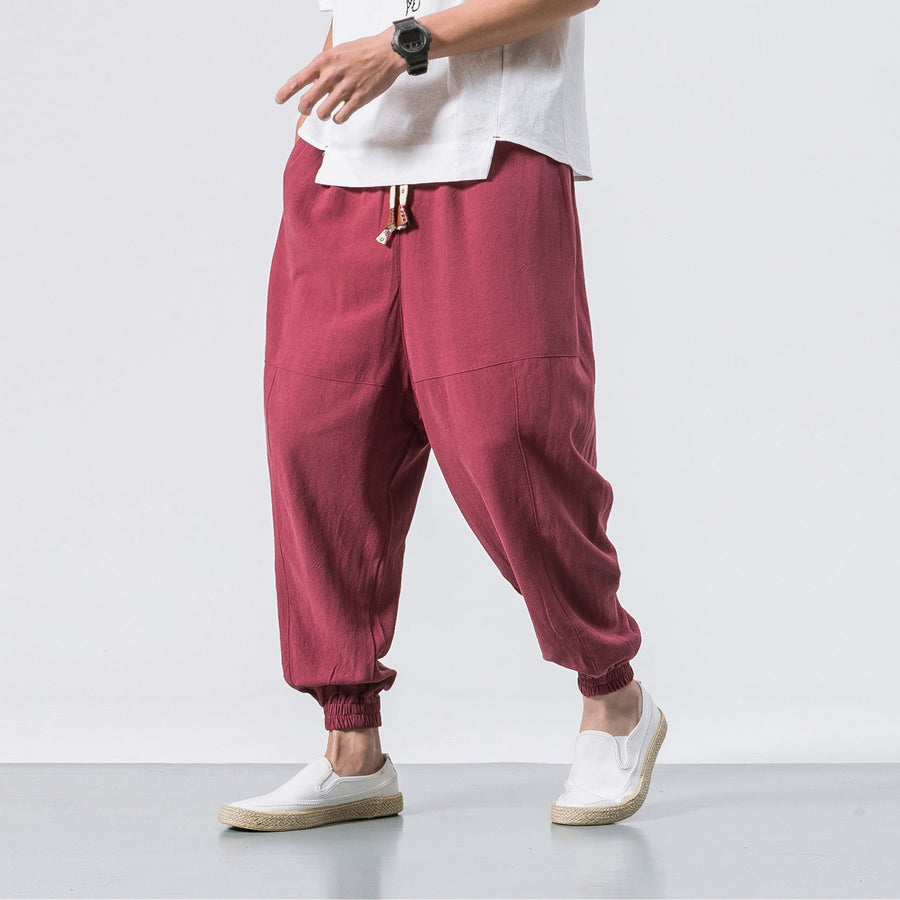
- Volume in one place. A wide trouser with a fitted top, or a boxy top with a tapered trouser.
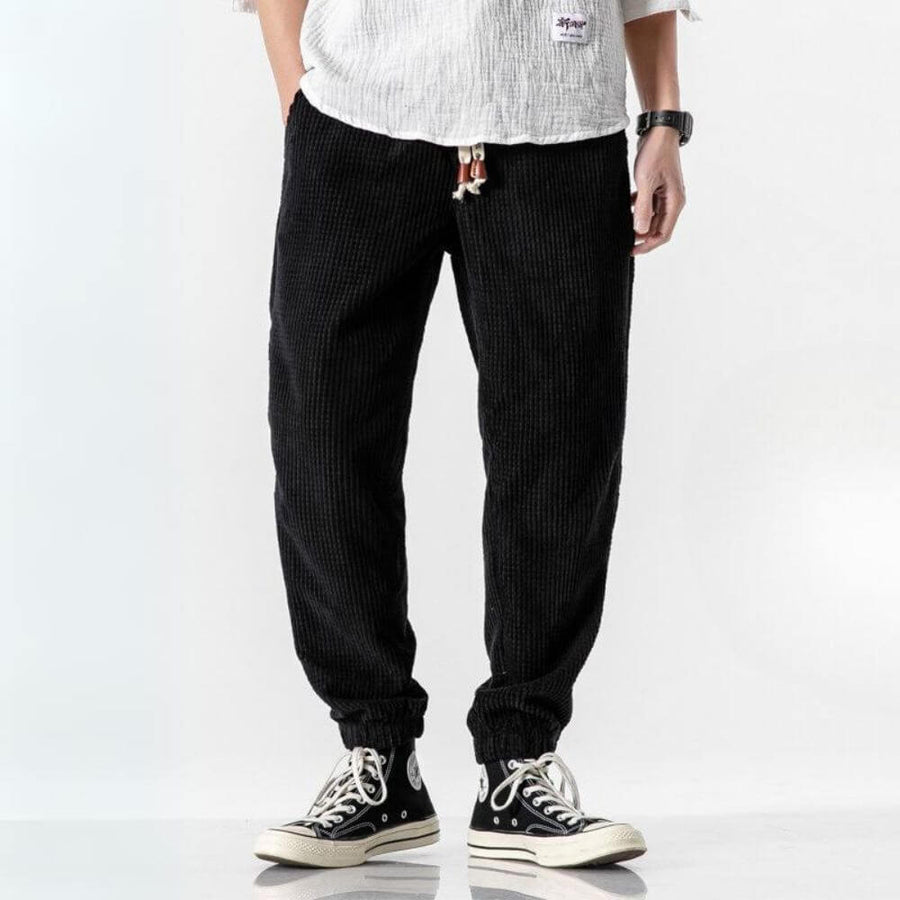
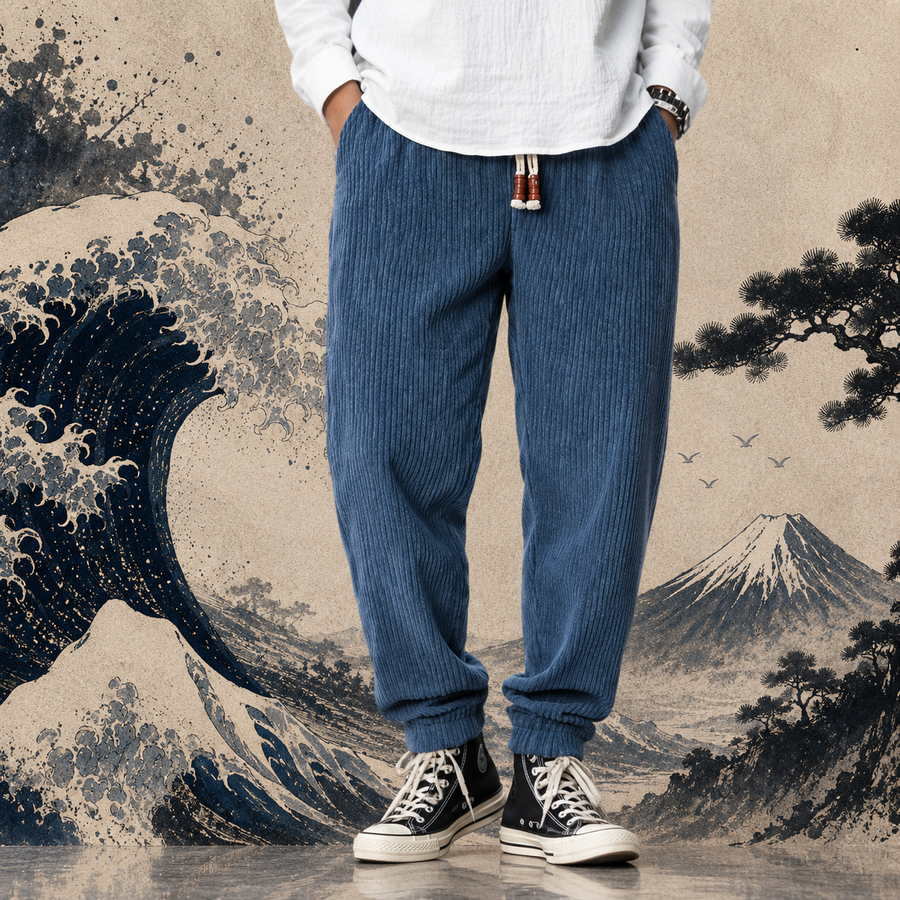
- Heavy fabric. Thick cotton jersey, corduroy, canvas. It holds a shape instead of collapsing onto the body.
- Muted colour with one accent. Black, navy, olive, ecru, with a single red, orange or gold.
- Texture over print. Slub cotton, corduroy ribs, waffle knit, embroidery.
- Layering. A tee under an overshirt under a haori, each a slightly different length.
Without the hype
Hype streetwear runs on scarcity: limited drops, resale prices, queues. Japanese everyday streetwear runs on the opposite idea. Buy a few good pieces and wear them until they look like yours. That fits a man in his thirties or forties much better than chasing the next release.
It also means you don't need a single logo. Some of the most "Japanese" outfits on the street have no visible branding at all.
A starter kit
- A heavy oversized tee. Boxy, dropped shoulders, real weight. Our oversized tees are the base layer for everything else.
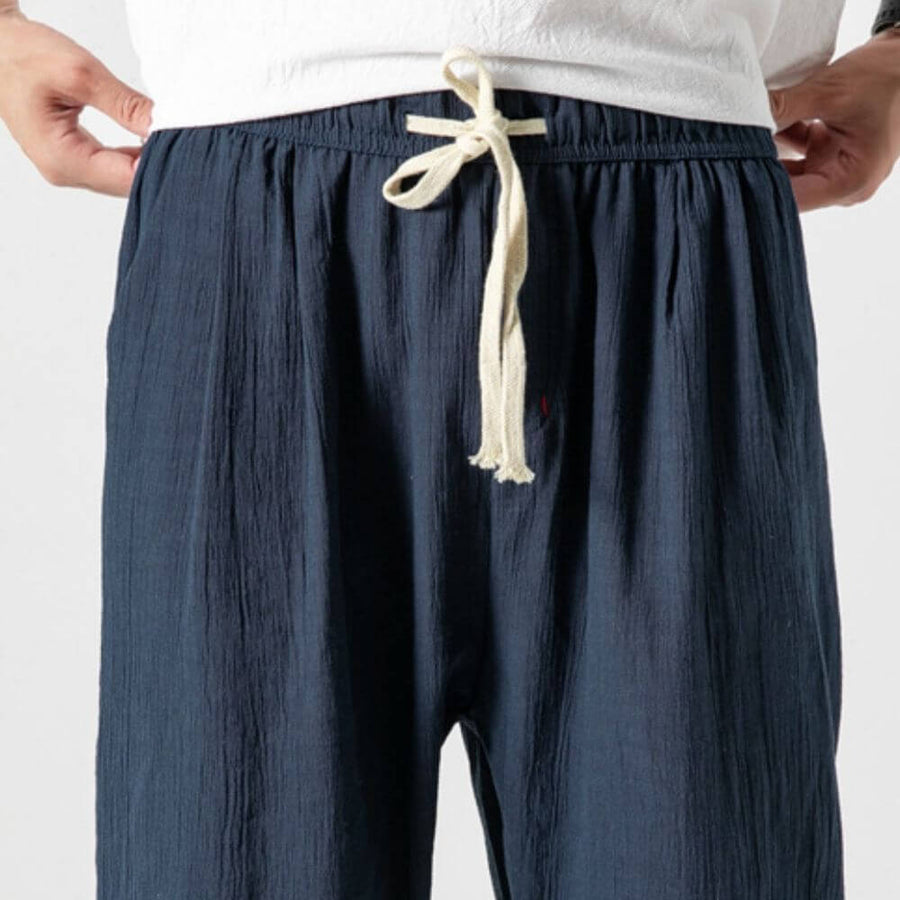
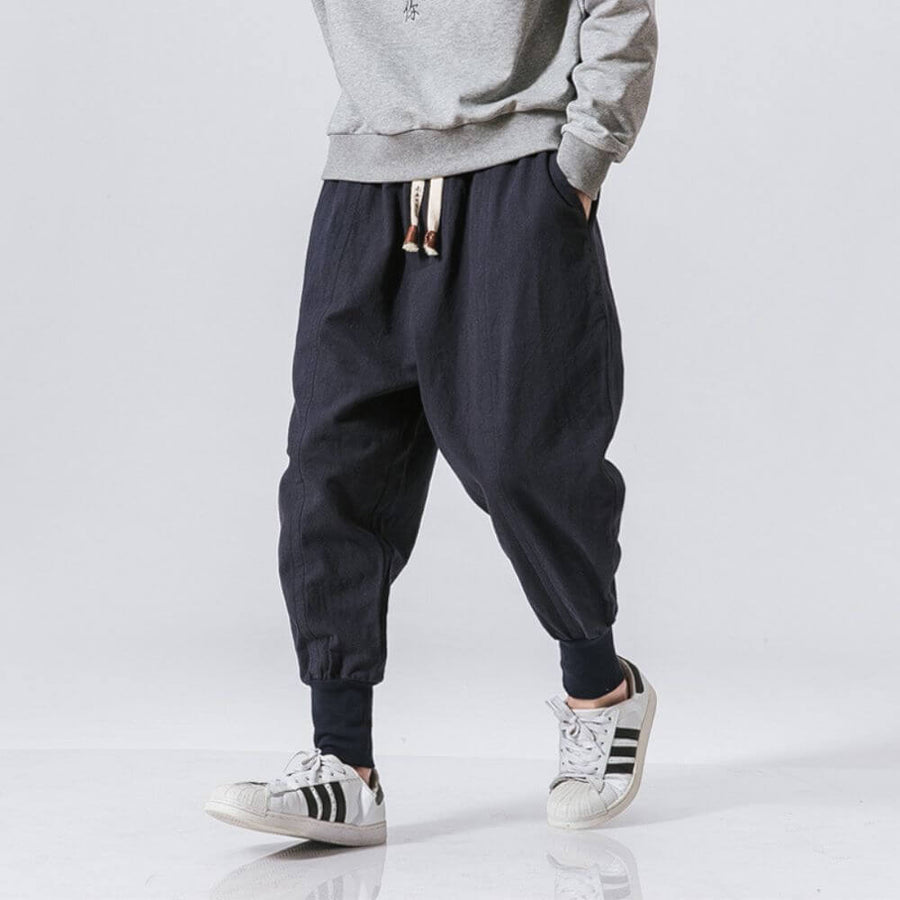
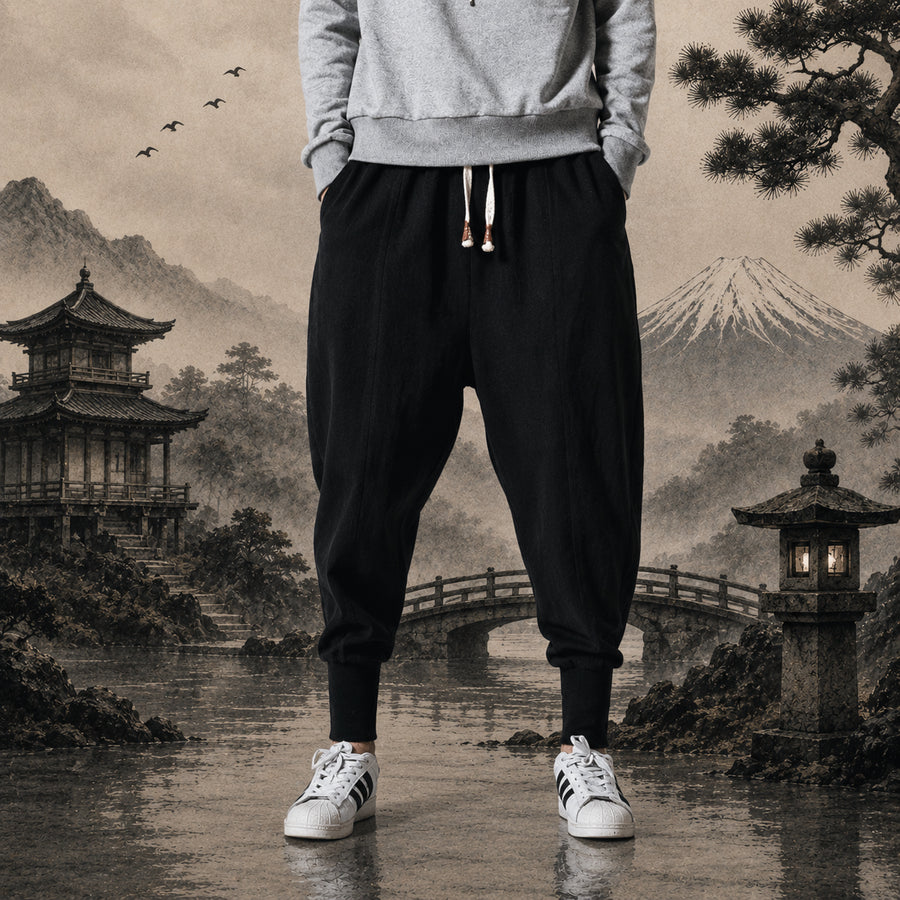
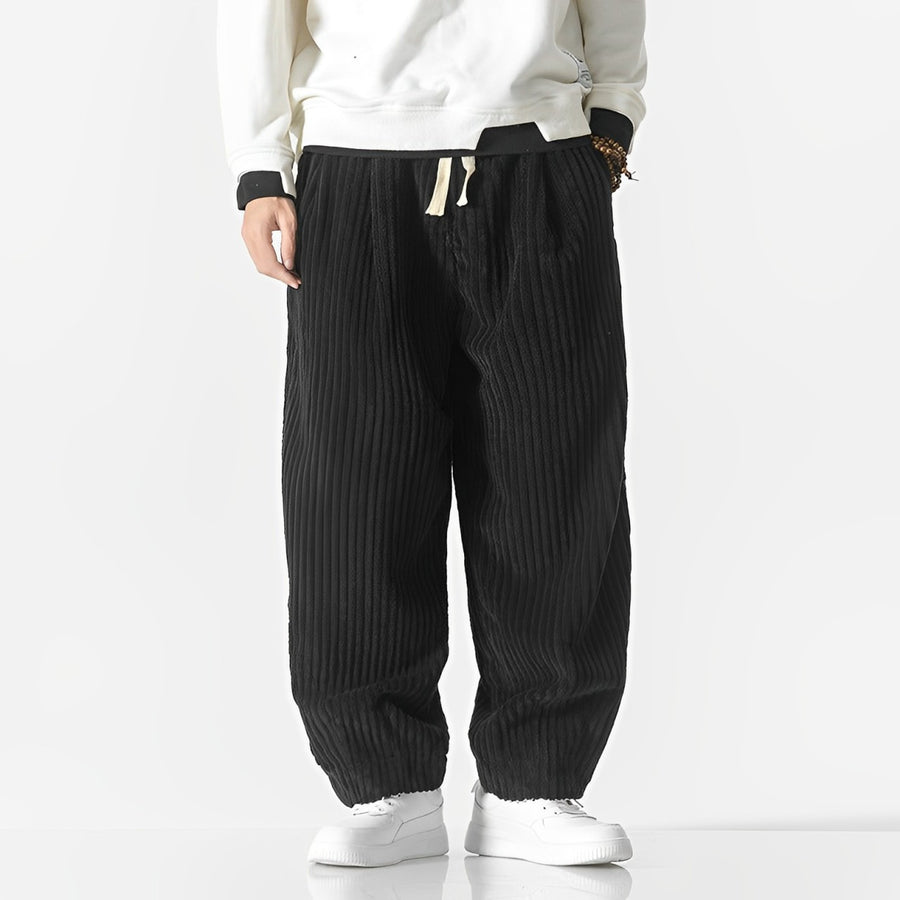
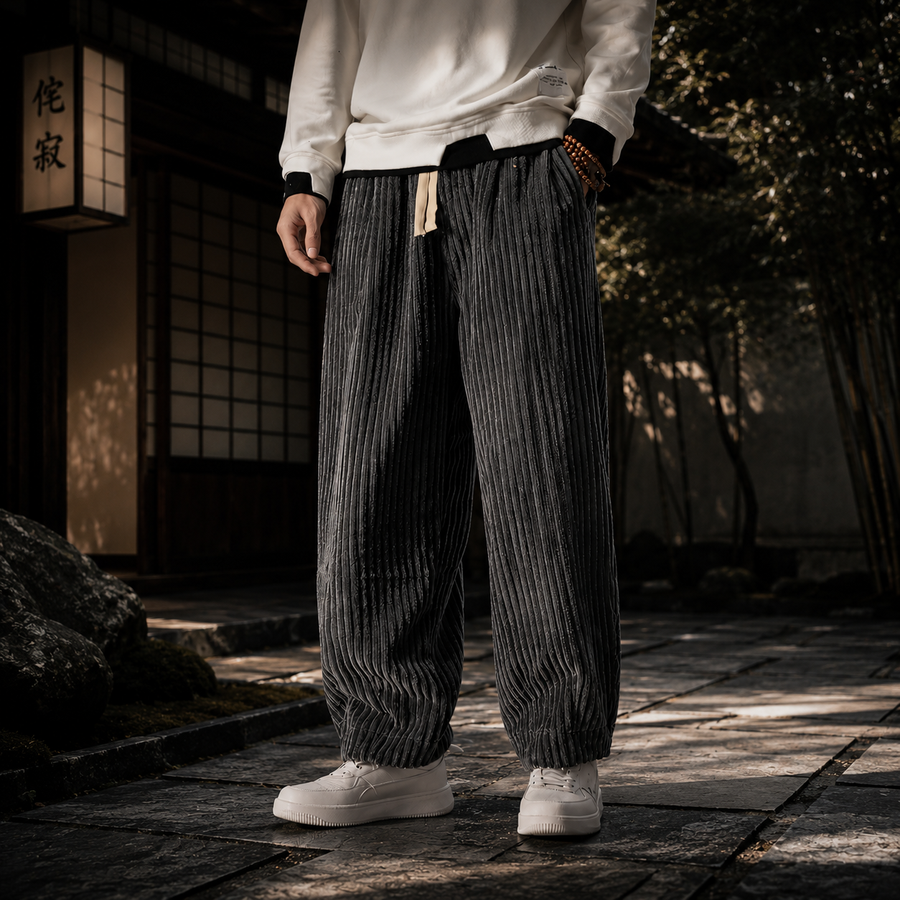
- One pair of wide or relaxed trousers. Corduroy for the cold months, like the Mori in heavyweight wide-wale cord with an exaggerated wide leg and a drawstring waist; cotton harem trousers for the rest of the year.
- A heavyweight sweatshirt. The Komorebi is 405 GSM cotton in an oversized cut, the kind of weight that gives a sweatshirt its shape.
- One jacket with character. A sukajan, a haori or a quilted kimono-style coat. See sukajan jackets.
- Clean trainers.
That is five pieces, and they combine into a week of outfits.

How to wear it past 30
- Keep the volume in one place, not everywhere.
- Choose texture over graphics. One embroidered piece beats three printed ones.
- Mind the shoes. Clean leather or canvas trainers, or boots in winter.
- Fit the length. Wide trousers should just break on the shoe; tapered ones should sit at the ankle.
For more on the cultural side, read Japanese-inspired clothing: why it isn't a costume. For the hoodies and sweatshirts that make the base of most outfits, see hoodies and sweatshirts.
Sizing
Japanese streetwear is often worn roomy. Our labels show Asian sizes, about one size smaller than EU, so choose one size up for a regular fit and two for an oversized look.
Start with the shape
Free tracked delivery, duties included, 14-day returns. Labels show Asian sizes: take one size up.
Shop oversized tees