From dojo to screen: the clothes in martial-arts anime and their real history
Short answer: the clothes in martial-arts anime are mostly real. The wandering swordsman's wide pleated trousers are a hakama, worn by samurai and still worn in kendo, aikido, kyūdō and iaidō. The fighter's white cotton jacket and trousers are a keikogi (or gi), standardised for judo around the turn of the twentieth century. And the kung-fu student's loose trousers gathered at the ankle come from everyday Chinese clothing, which martial artists trained in long before uniforms existed.
Why anime gets this right
Animators draw what reads instantly on screen. A silhouette tells you who someone is before they say a word: the swordsman, the brawler, the monk, the student. The clothes that do that best are the ones with a real history behind them, because generations of viewers already associate them with discipline, travel and fighting.
That is also why these shapes work off-screen. They were designed for bodies that move.
The hakama: the swordsman's trouser
The hakama is a very wide trouser, pleated at the front and tied at the waist with long cords. In the samurai era it was everyday formal wear for the warrior class, worn over a kimono. Today it survives in the martial arts that descend from sword training and archery, especially kendo, iaidō, kyūdō and aikido, and at formal occasions.
Traditional hakama have seven pleats, five at the front and two at the back. In many budō schools teachers explain them as the virtues a martial artist should keep, a story you will hear in dojos around the world.
Why so wide? Practical reasons are often given: the width allows deep stances and kneeling, and it hides the exact position of the feet from an opponent. On screen, it gives every turn and step a sweep of movement.
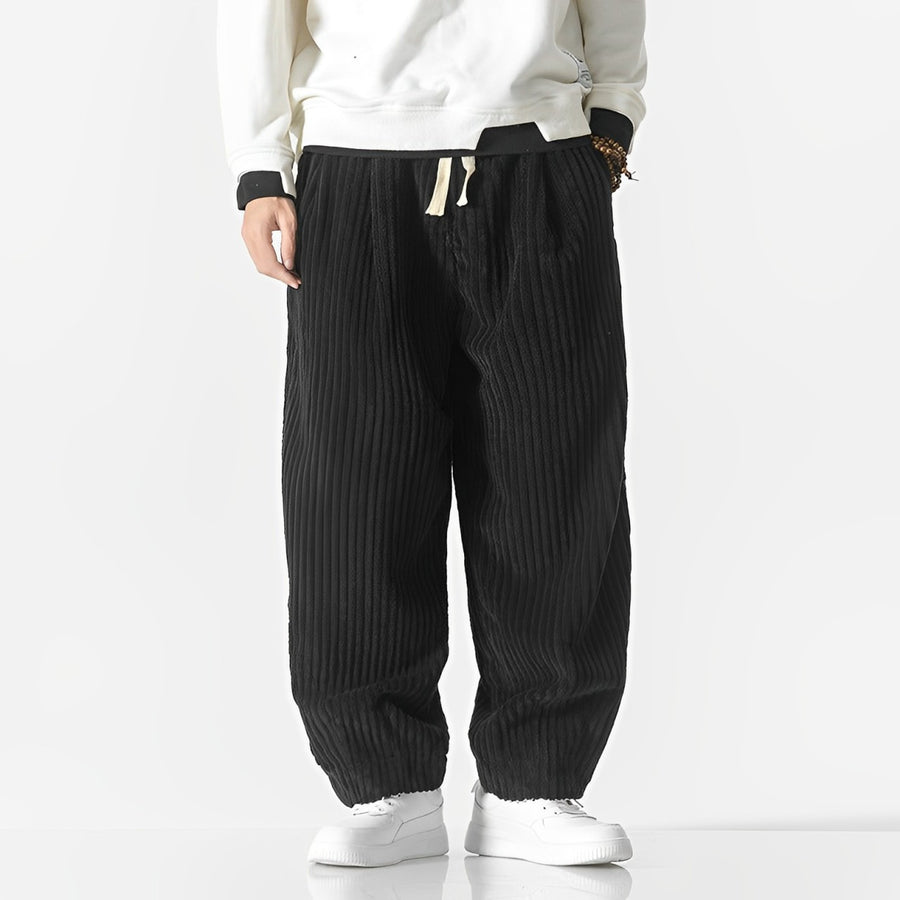
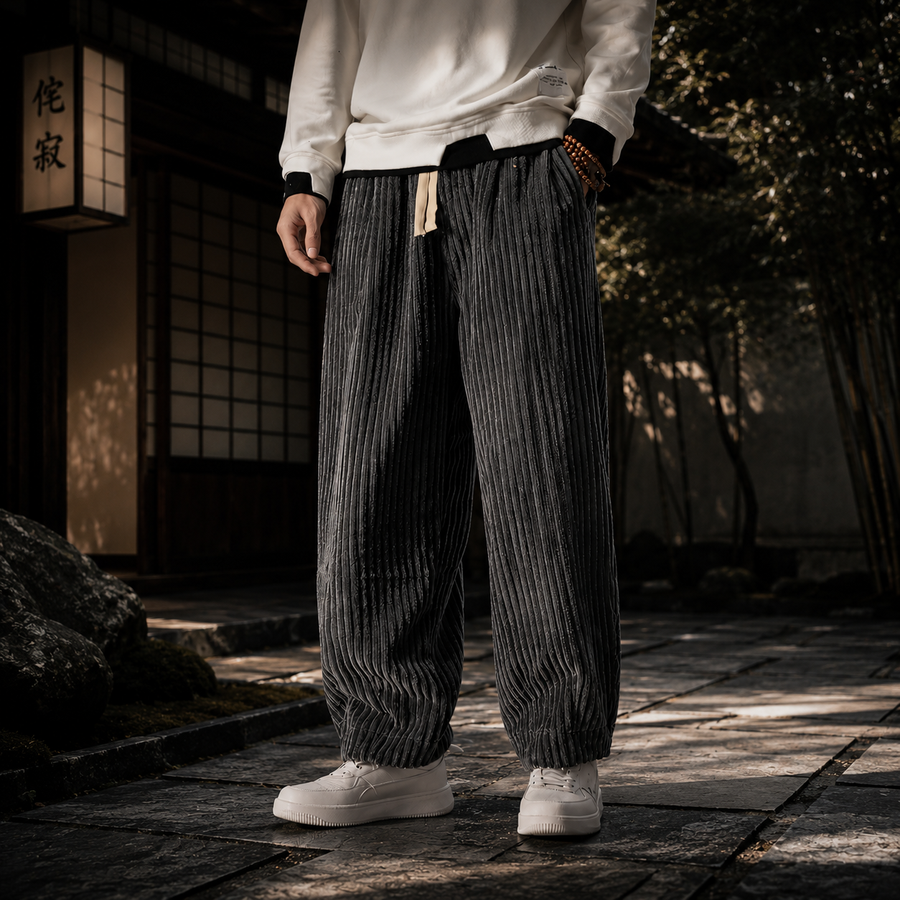
If you like the shape, modern hakama-style trousers keep the width and drape without the formality. See our hakama collection, or the Streetwear Hakama Pants, with a layered draped front panel and an elastic waistband.
The gi: the fighter's uniform
The white cotton jacket and trousers you see in judo, karate and many anime fight scenes are the keikogi, literally "practice clothes". The modern version took shape with judo, whose founder, Kanō Jigorō, introduced a heavier cotton uniform in the late nineteenth and early twentieth centuries so it could survive grips and throws. Karate and other arts adopted similar uniforms later, along with the coloured belts.
On screen, the gi tells you this character trains. Torn sleeves tell you they train a lot.
Kung-fu trousers: everyday clothes first
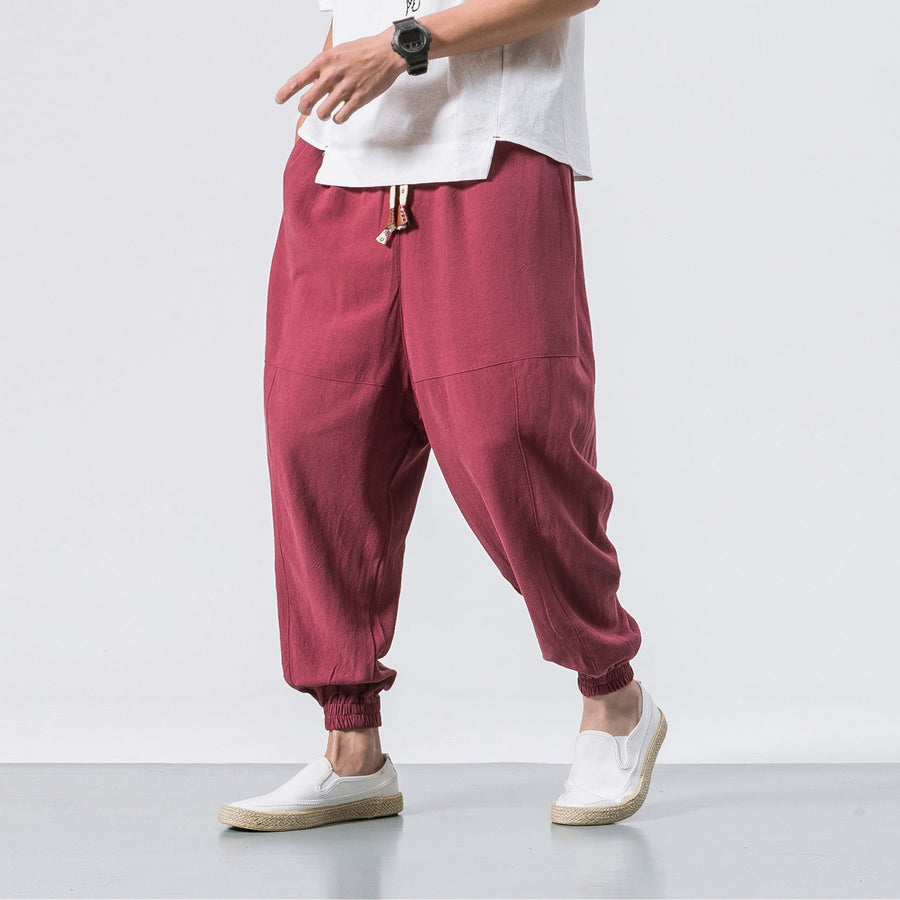
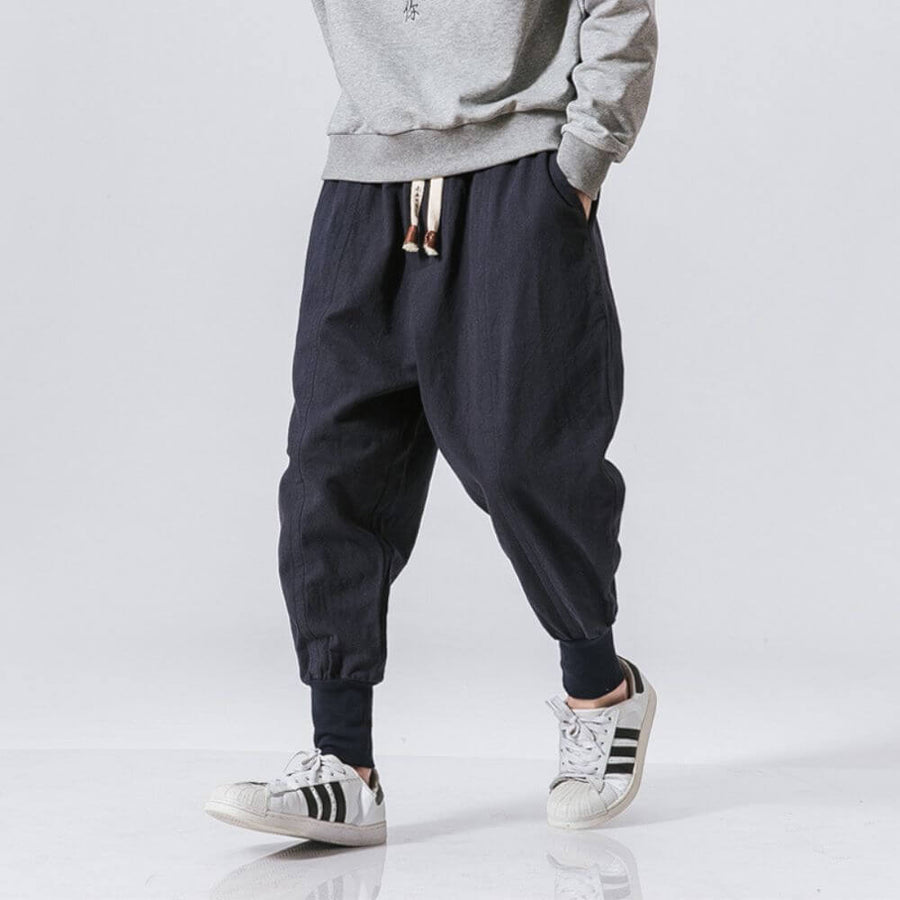
The loose trousers bound at the waist and gathered at the ankle that you see on kung-fu characters weren't originally a uniform at all. Historically, Chinese martial artists trained in the everyday clothing of the time: loose trousers tied at the waist and cuffs. The loose cut allows deep stances and high kicks; the tied cuffs keep the hem out of the way. Standardised uniforms came much later.
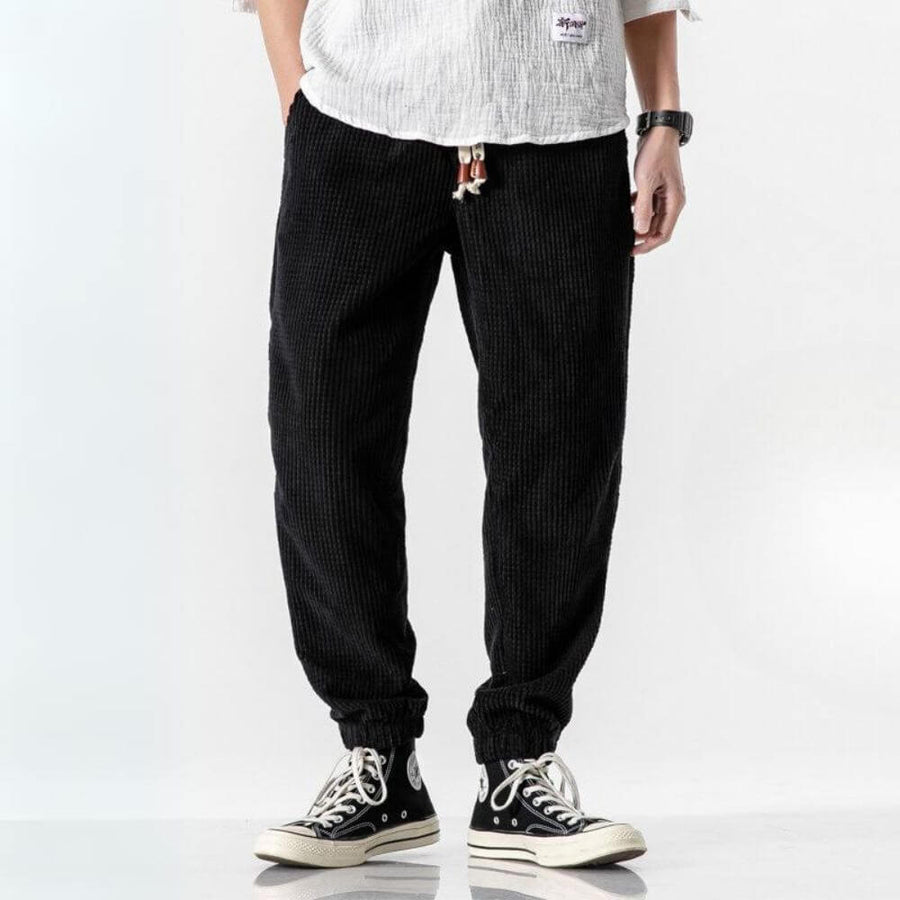
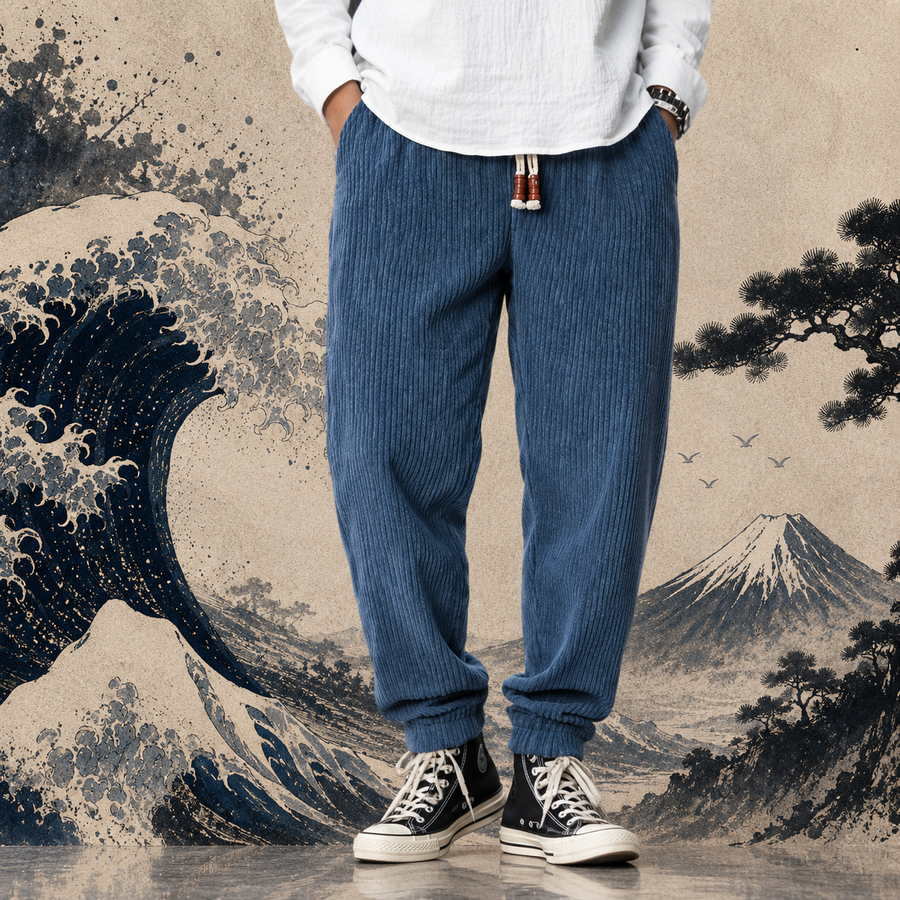
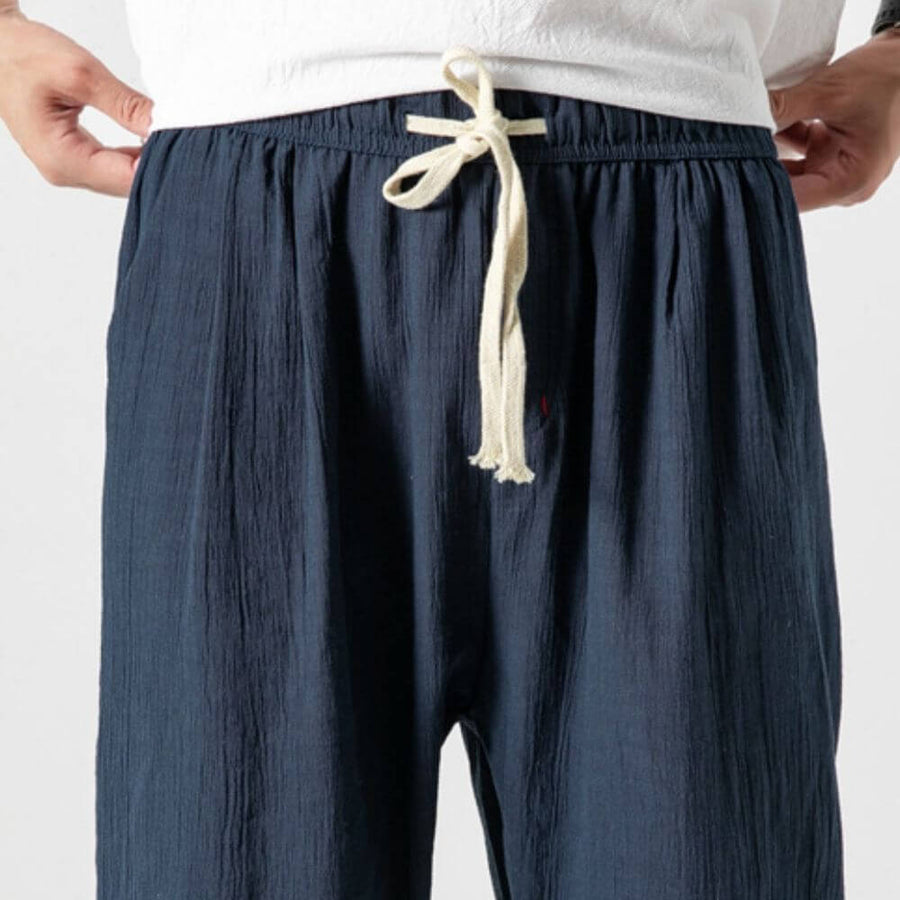
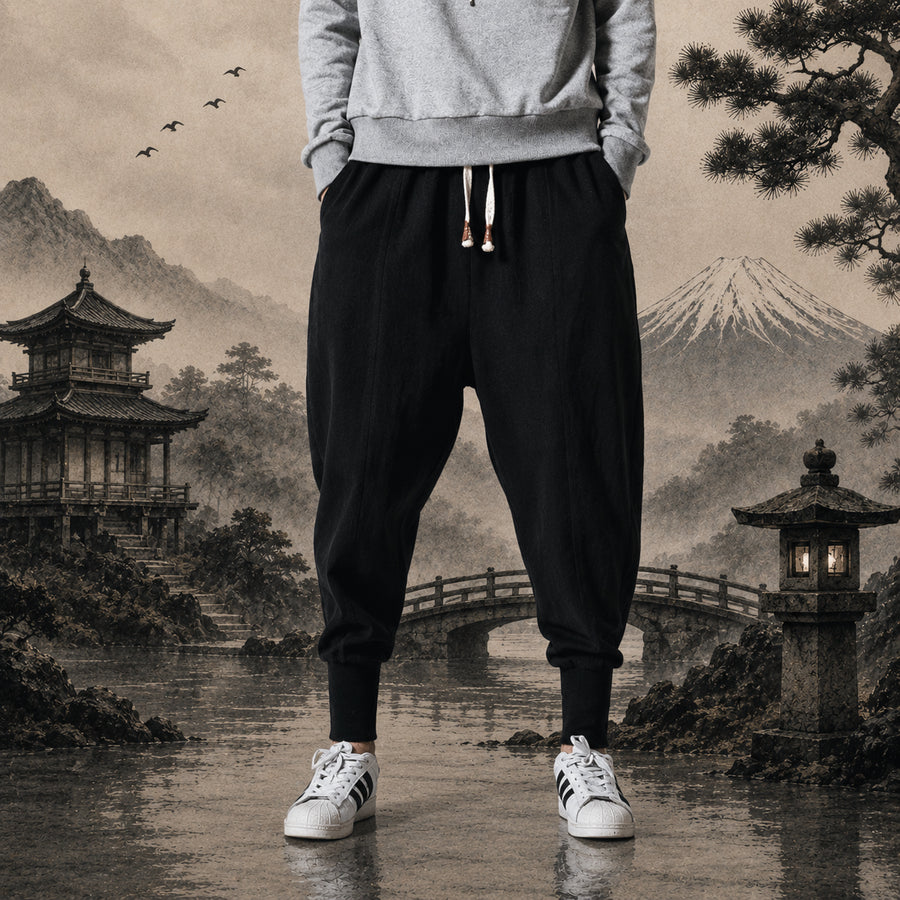
That logic is almost identical to a modern Japanese harem trouser. The Arashi, for example, is 100% cotton with a dropped crotch, an elasticated drawstring waist and ribbed ankle cuffs. It is not a uniform. It just moves like one.

The haori: the travelling coat
Many anime characters wear a loose open jacket over their training clothes. That is usually a haori, a hip- or thigh-length jacket worn over a kimono, open at the front and tied with short cords. It is a lightweight, layerable piece, and it is one of the easiest to wear today. Our kimono and haori collection has several, from plain woven patterns to bold back prints.
Wearing the dojo look outside the dojo
The test is the same as for any reference: one piece at a time, worn with ordinary clothes.
- Hakama-style trousers with a plain black tee and simple trainers.
- Harem trousers with a hoodie, the way people actually leave a training session.
- A haori over a white tee and dark jeans.
Avoid wearing the whole uniform in public. That is cosplay, which is great, but a different thing.
A note on what we sell
These are clothes inspired by real Japanese and East Asian garments. They are not martial-arts uniforms, not official merchandise of any anime and they don't feature characters from any series.
Sizing
Our labels show Asian sizes, about one size smaller than EU. Choose one size up from your usual; between two sizes, take the larger. Wide hakama-style trousers forgive more; harem trousers rely on the drawstring.
Trousers with a training history
Free tracked delivery, duties included, 14-day returns. Labels show Asian sizes: take one size up.
Shop hakamaSources
- Shaolin Kung Fu, on the history of kung-fu training clothes: https://shaolin-kungfu.com/kung-fu-uniform-significance-tradition-practicality-discipline/