Samue: the monks' work clothes behind modern comfort wear
Short answer: samue (作務衣) are the work clothes of Japanese Zen Buddhist monks: a wrap-front jacket and loose trousers, usually in cotton or linen and often dyed indigo, made for samu, the daily physical work of a temple. Craftsmen later adopted them, and today many people in Japan wear samue at home. The idea behind them, clothing cut for a body that bends, lifts and sits all day, is exactly what makes relaxed Japanese trousers comfortable now.
Where samue comes from
In Zen monasteries, practice is not only meditation. It is also samu (作務): the work of keeping the temple running. Sweeping, cleaning, gardening, carrying wood, cooking. Monks treat this work as part of their practice, done with the same attention as sitting meditation.
Robes are not made for that kind of day. The garment that grew up around it is the samue: literally, "clothing for samu". It has two pieces:
- a jacket that wraps across the front and ties at the side, with sleeves that are often narrowed at the wrist so they don't get in the way;
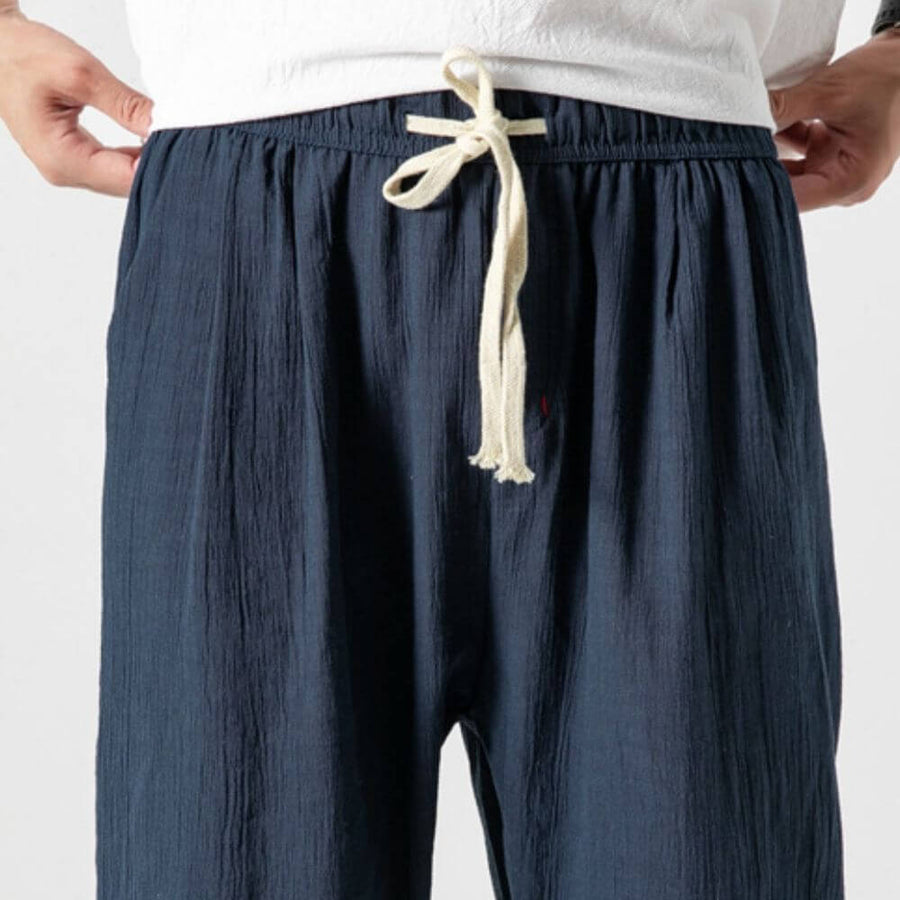
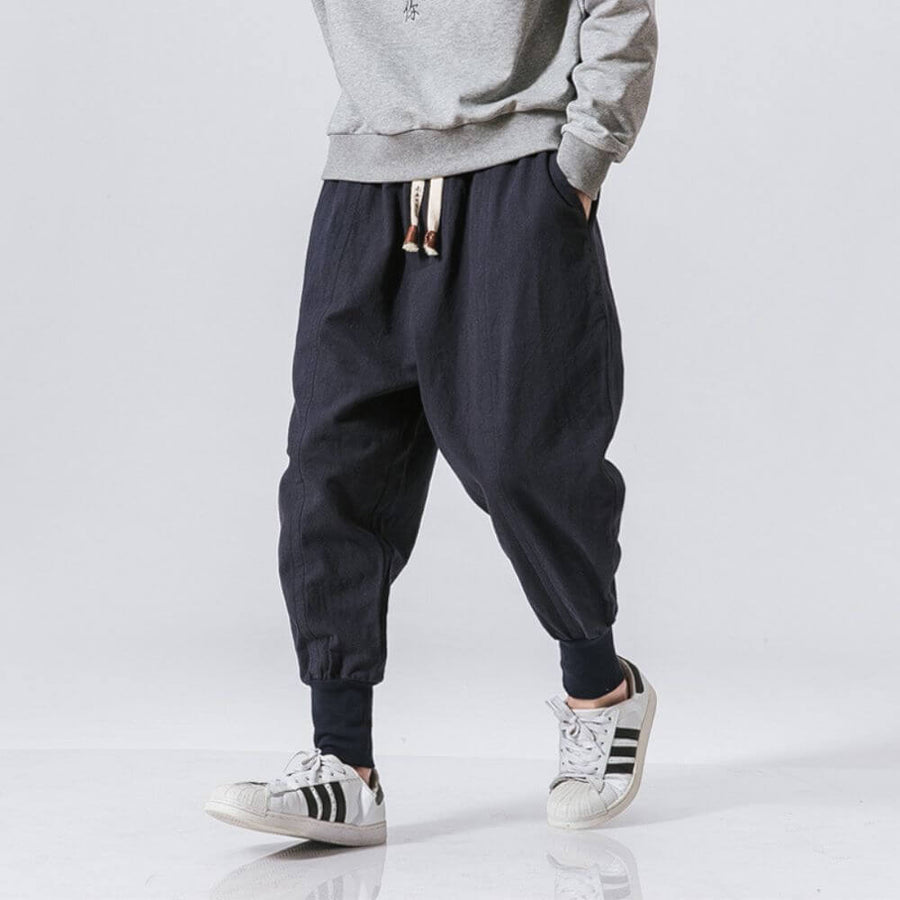
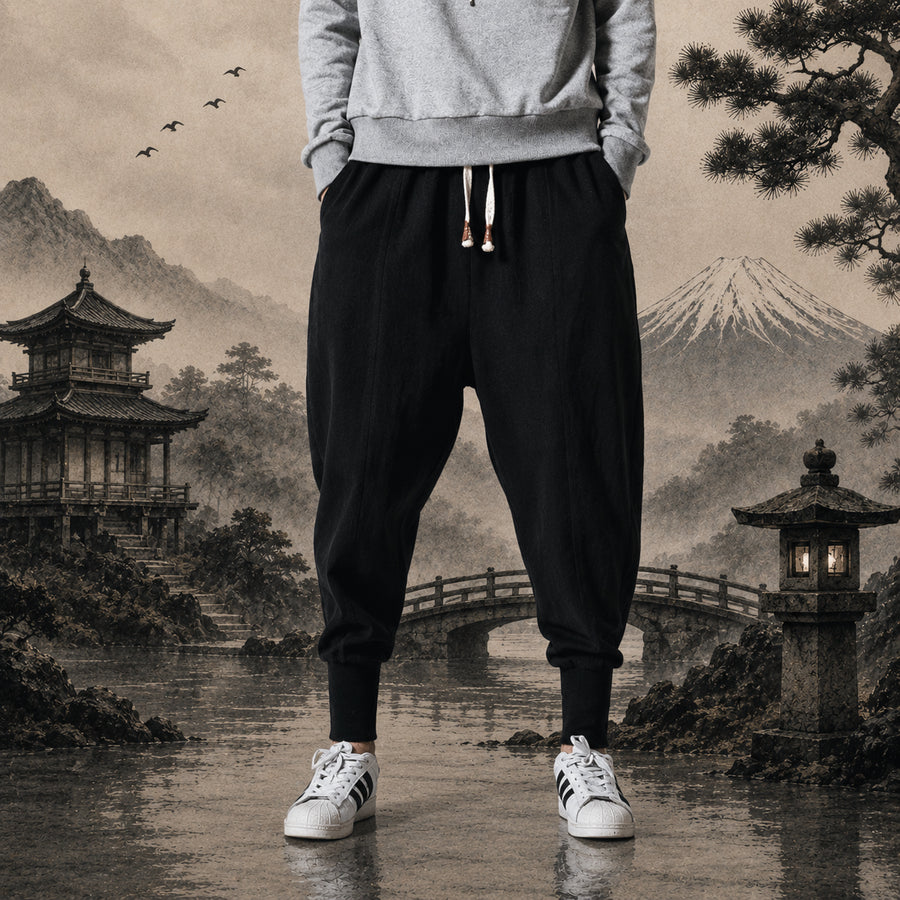
- trousers that are loose through the seat and leg, tied or elasticated at the waist, and usually gathered at the ankle so they don't drag in dust or water.
The fabric was traditionally cotton or linen, and indigo was a common colour. Indigo-dyed cotton was everyday cloth in Japan for centuries: hard-wearing, easy to mend, and it softens and fades beautifully with use.
From temple to workshop to living room
Over time samue moved beyond the monastery. Potters, woodworkers, carpenters and other craftsmen adopted them, because the logic was the same: long days of physical work, a lot of bending and sitting on the floor, and a need for clothes that don't bind.
Today samue are also a common choice for relaxing at home in Japan, and you will see them in traditional restaurants, at ryokan inns and among artisans. They have become a kind of quiet signal: comfortable, practical, a little traditional, never showy.
What samue gets right
Look at samue as a design and four principles stand out:
- Room where the body folds. Loose at the seat and thigh, so squatting and kneeling don't strain the fabric.
- A waist that ties or gives. No rigid button to fight against after hours of work.
- A gathered ankle. The trouser stays out of the way and keeps a clean line.
- Natural fabric. Cotton and linen breathe through a long day and age well.
These are the same four things we look for in trousers for ordinary modern days. The temple has become an office, a car, a train or a kitchen floor, but the body still bends, sits and lifts.

How the idea lives on in our trousers
We don't sell samue sets, and we won't pretend our trousers are monastic garments. What we do is borrow the logic.
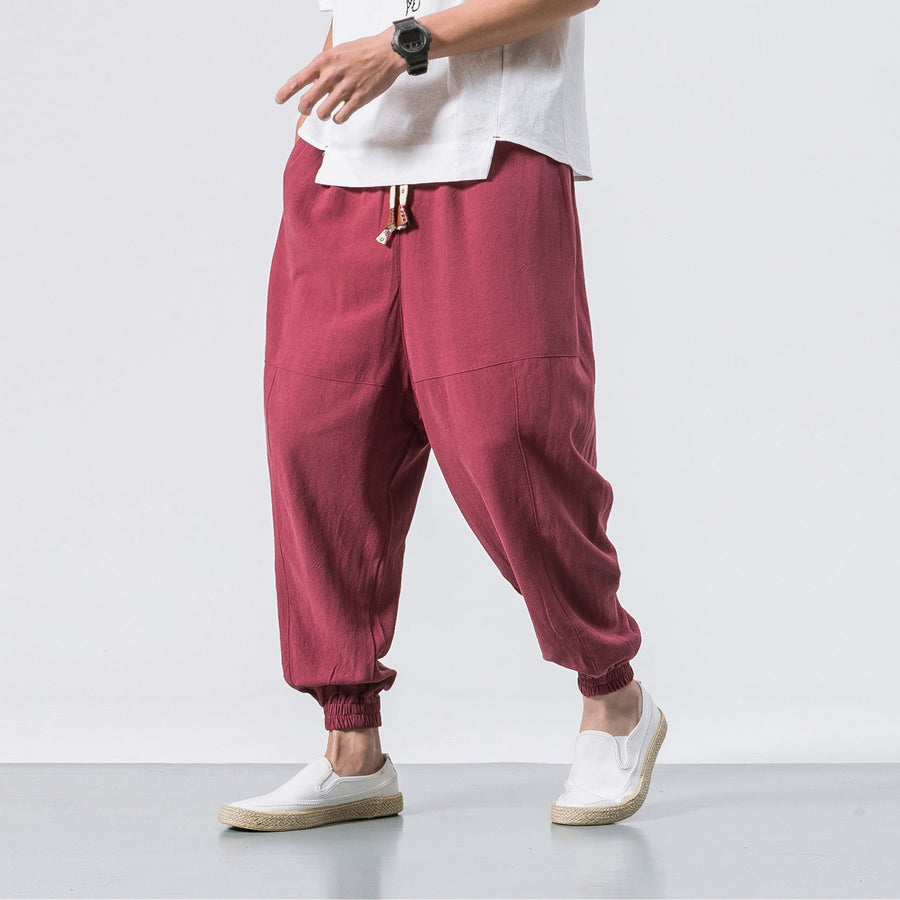
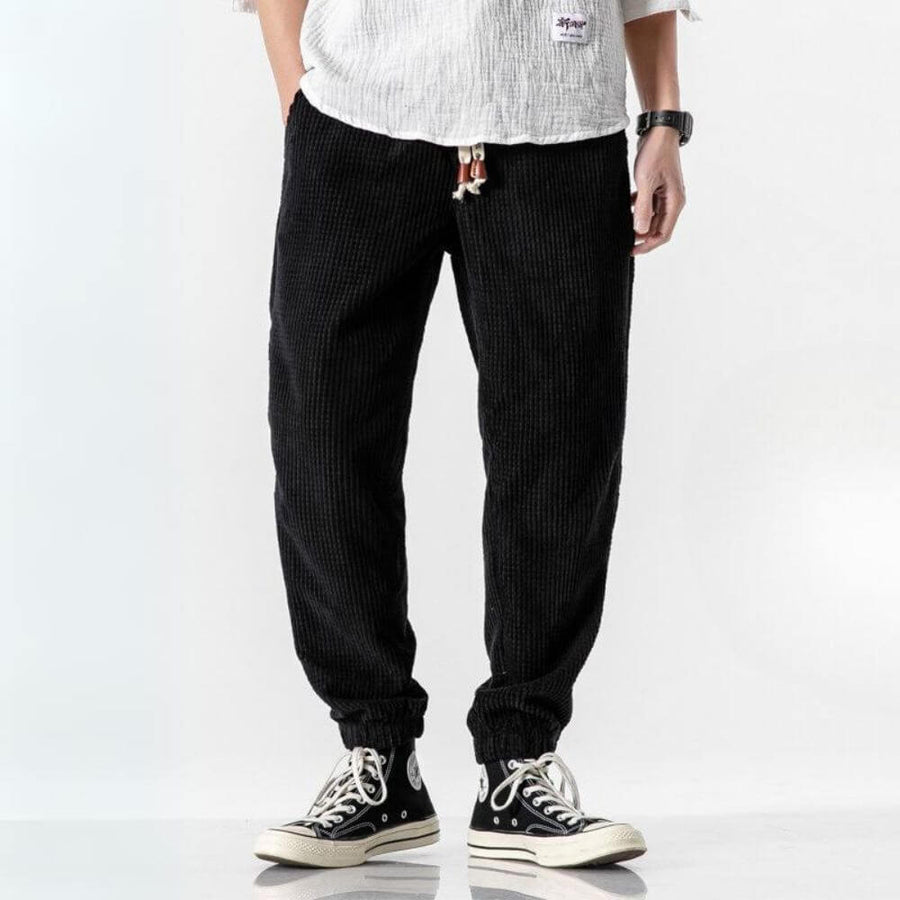
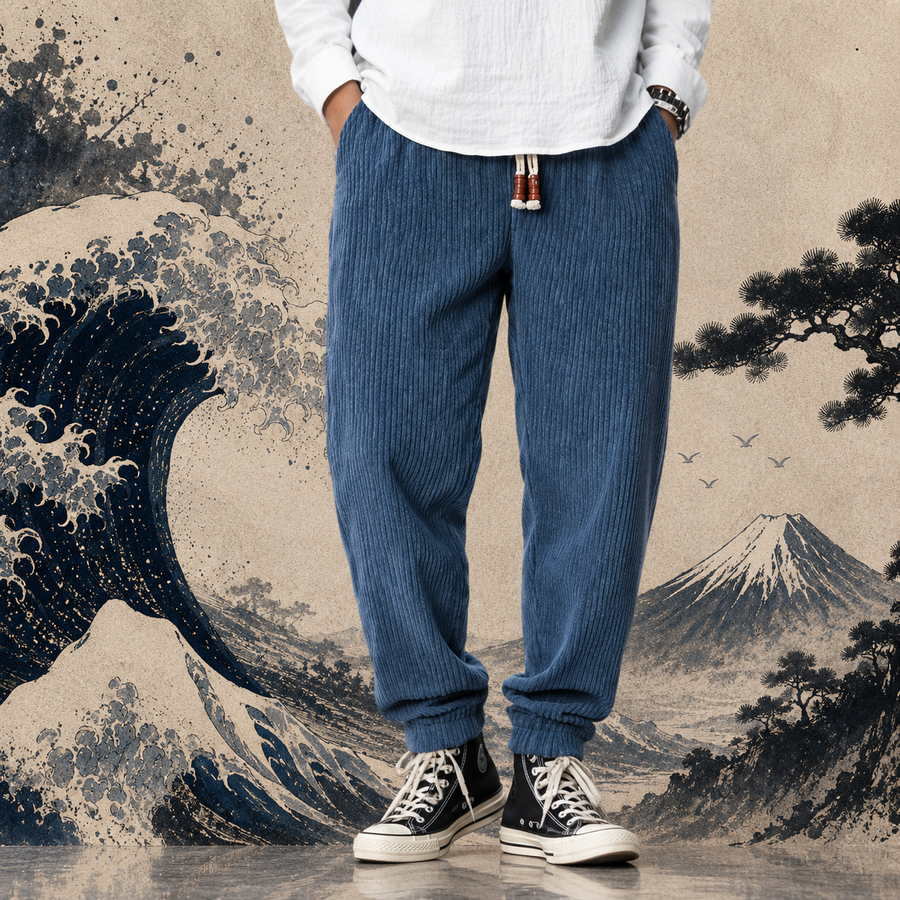
The Sakura is the most direct descendant: inspired by traditional Japanese workwear, with a textured cotton-linen weave, a comfortable elastic waistband and elasticated cuffs at the ankle. It looks like a calm, straight trouser and moves like a work garment.
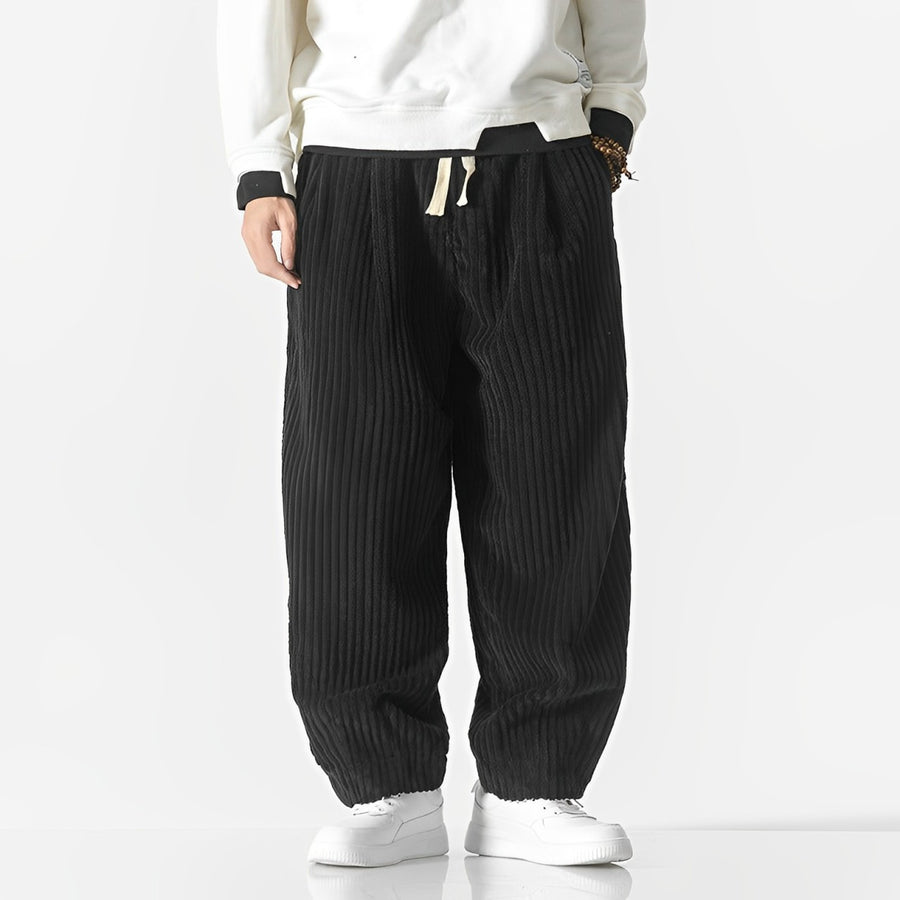
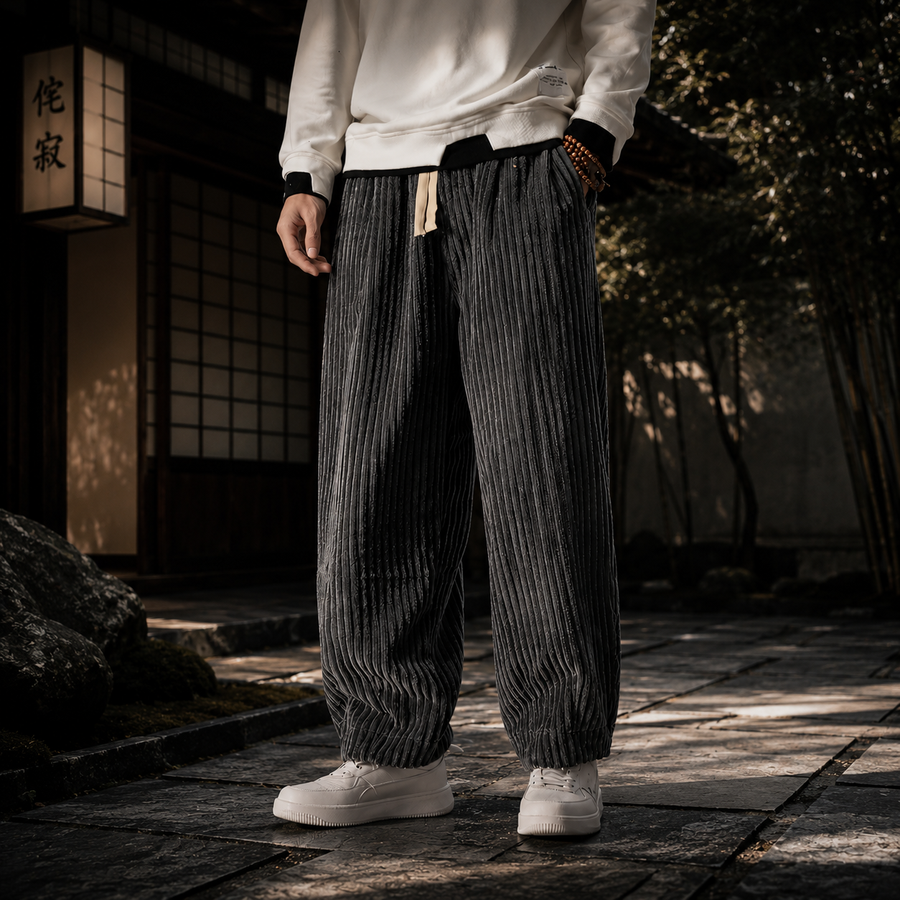
The Arashi takes the room further, with a dropped crotch, 100% cotton, an elasticated drawstring waist and ribbed cuffs. It is not a samue trouser, but it would understand one.
If you want the wider family of Japanese shapes, from haori jackets to hakama-style trousers, browse Traditional & Heritage.
Wearing the samue idea without the costume
A full samue set in public outside Japan can look like a costume. The trousers alone don't. Wear a samue-style trouser with a plain knit, a simple shirt or a padded jacket, keep the colours calm (indigo, charcoal, black) and let the comfort be the point. We wrote about this balance in Japanese-inspired clothing: why it isn't a costume.
Sizing
Our labels show Asian sizes, about one size smaller than EU. Choose one size up from your usual; between two sizes, take the larger. Email us your waist and length if you'd like a recommendation.
Work clothes for an ordinary day
Free tracked delivery, duties included, 14-day returns. Labels show Asian sizes: take one size up.
Shop traditional and heritageSources
- Wikipedia, Samue: https://en.wikipedia.org/wiki/Samue