How to wear Japanese trousers at 40 without looking like you're on holiday
Short answer: keep the trousers dark and the fabric matt, put something structured on top, wear proper shoes, and let the trousers be the only relaxed thing in the outfit. Japanese trousers look like holiday wear when everything else is relaxed too. Paired with a collar, a knit or a good jacket, they look like a decision.
The worry, said out loud
Most men over 35 who like the look of wide Japanese trousers have the same hesitation. "Harem pants" sounds like something for a festival, a beach in Thailand, or a twenty-year-old. They don't want to walk into the office, a client meeting or their kid's parents' evening looking as if they have come straight from a yoga retreat.
It is a fair worry, and it has a simple answer. The trousers are rarely the problem. The outfit around them is.
Five rules that change how they read
1. Dark and plain first
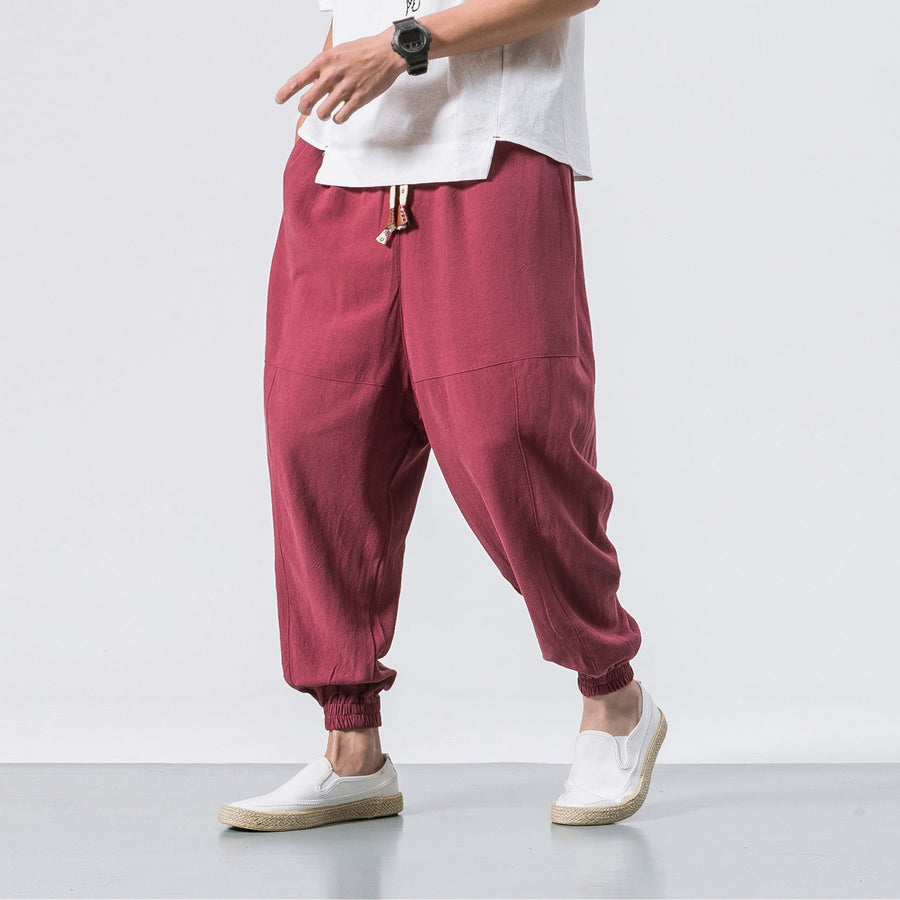
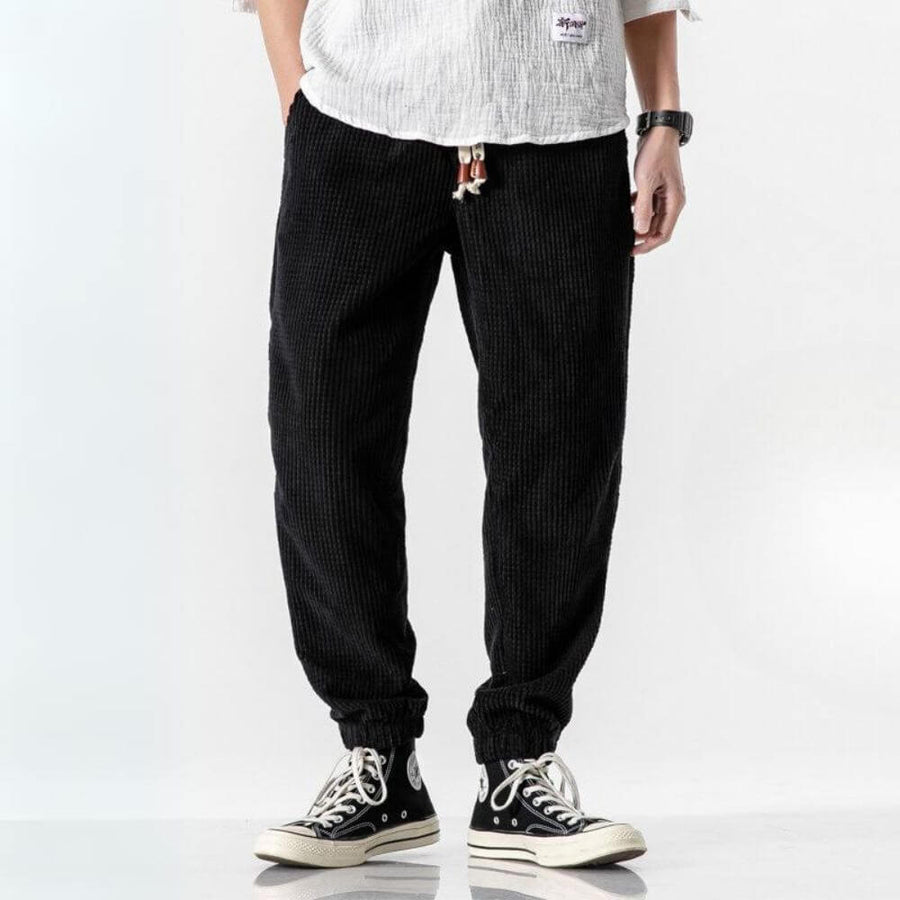
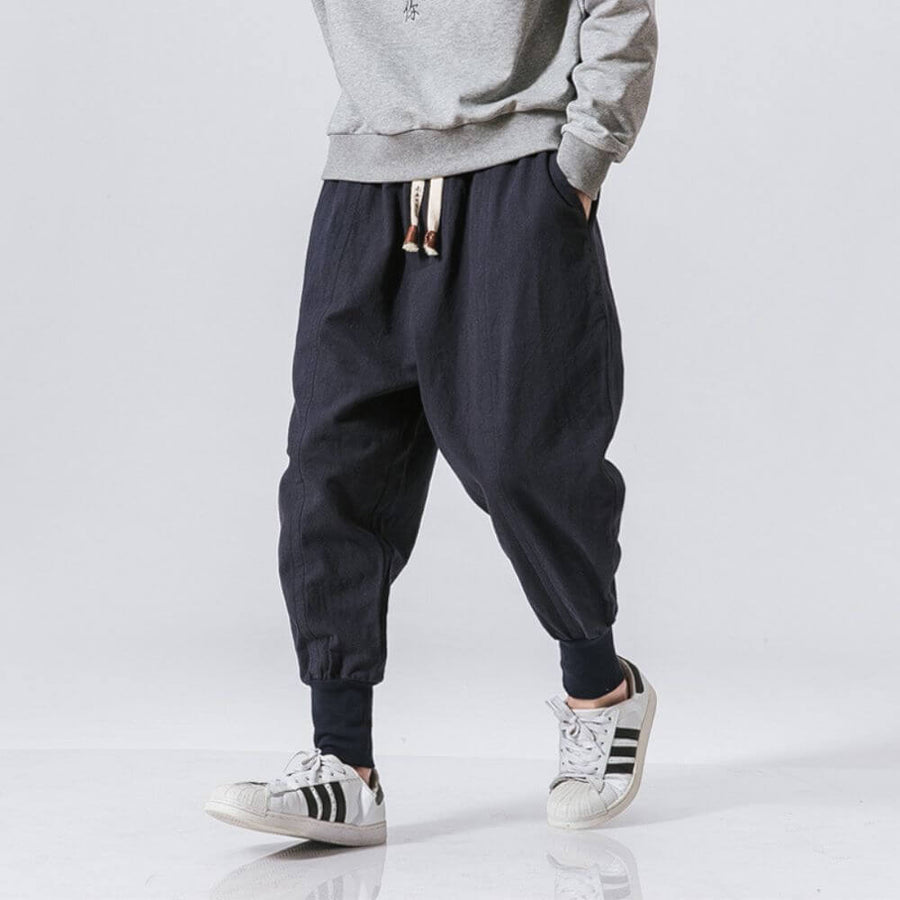
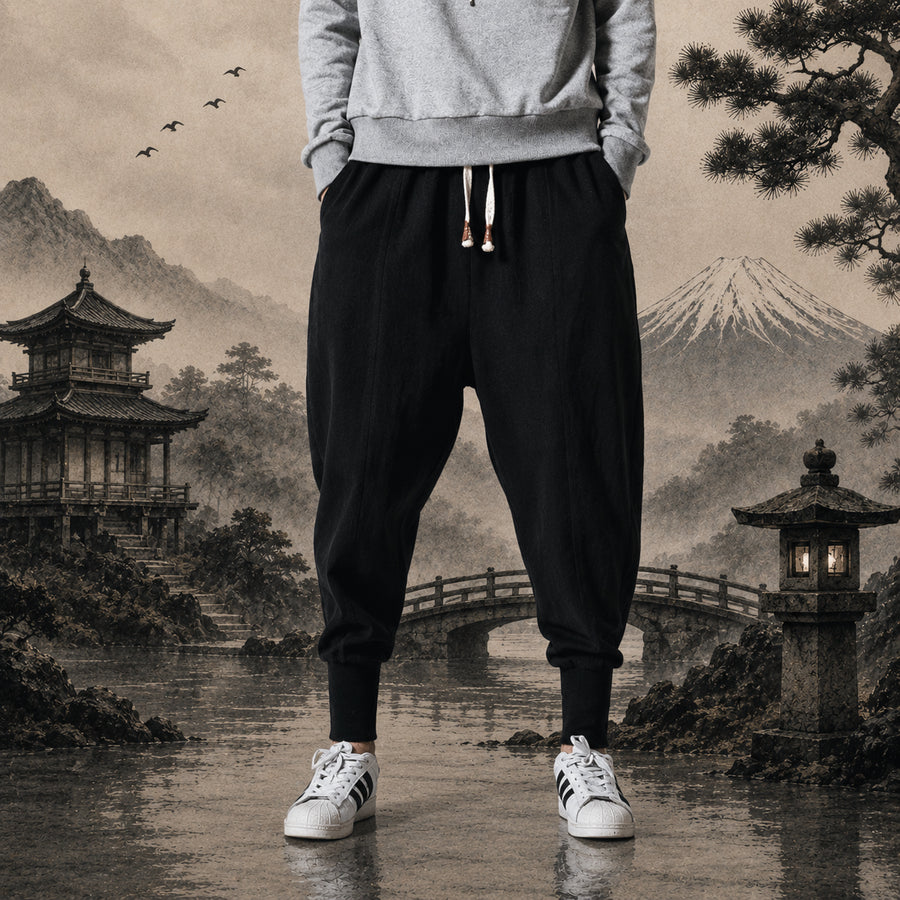
Black, navy and charcoal are your first pair. No print, no stripe, no shine. A dark relaxed trouser in a textured cotton looks closer to a tailored wide trouser than to beachwear. Save the red and the green for your second or third pair, once you have seen how much you wear the first.
2. Matt, textured fabric
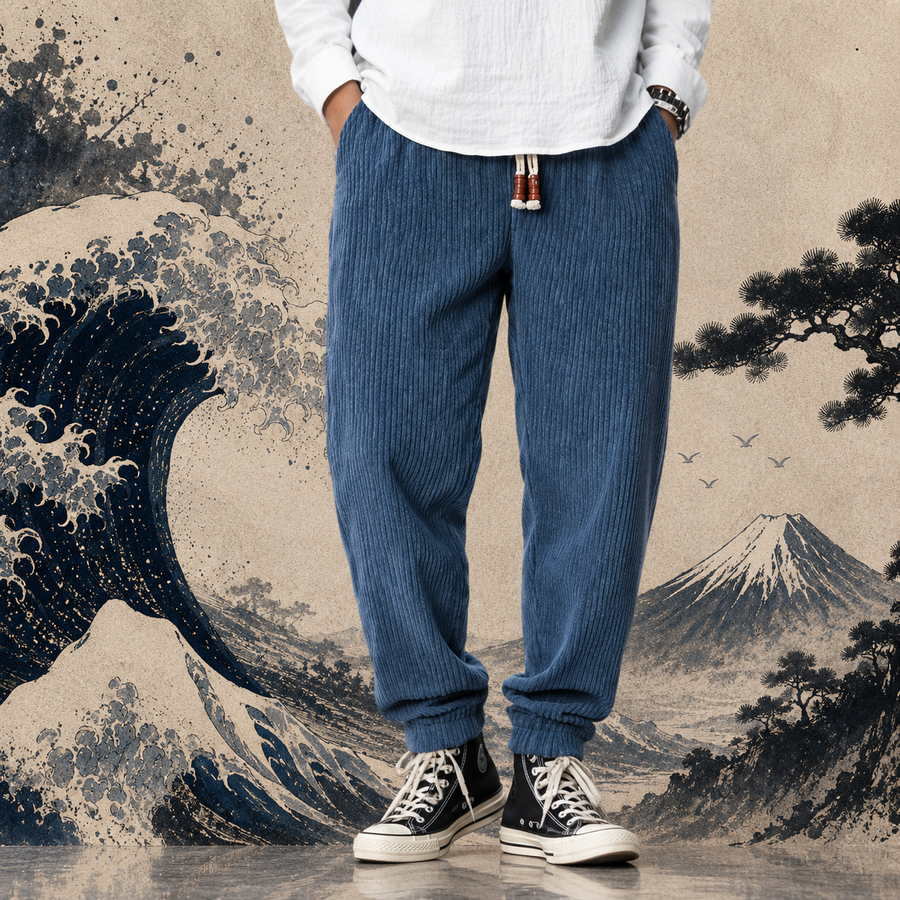
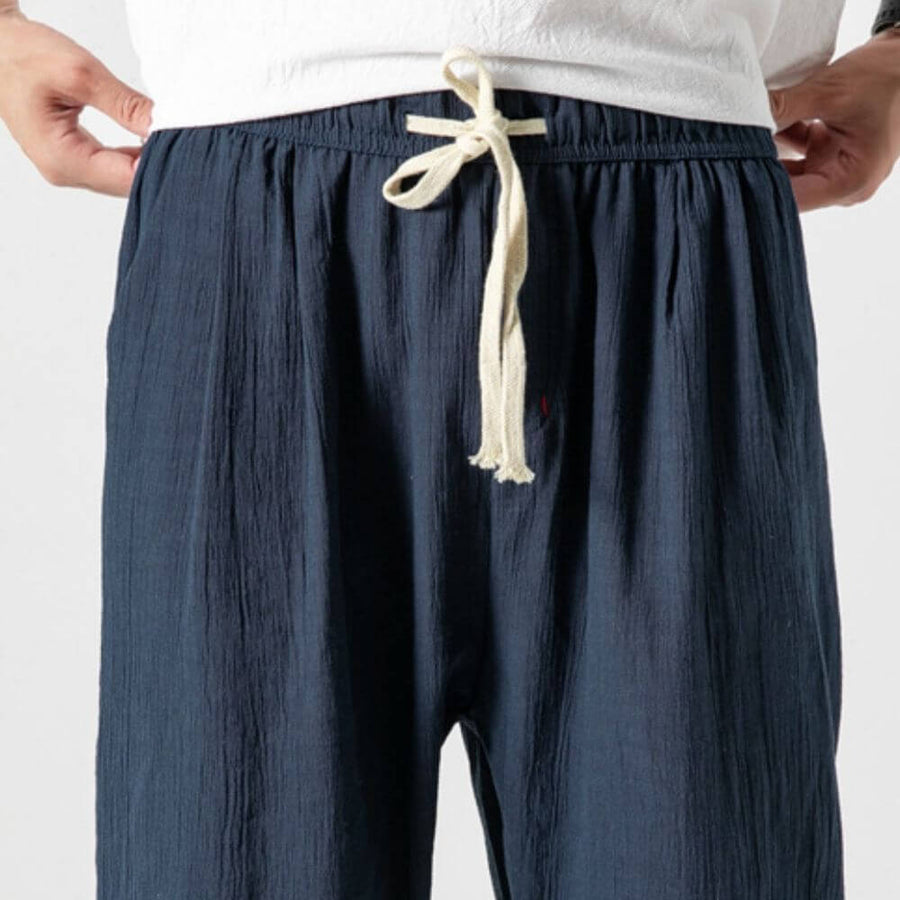
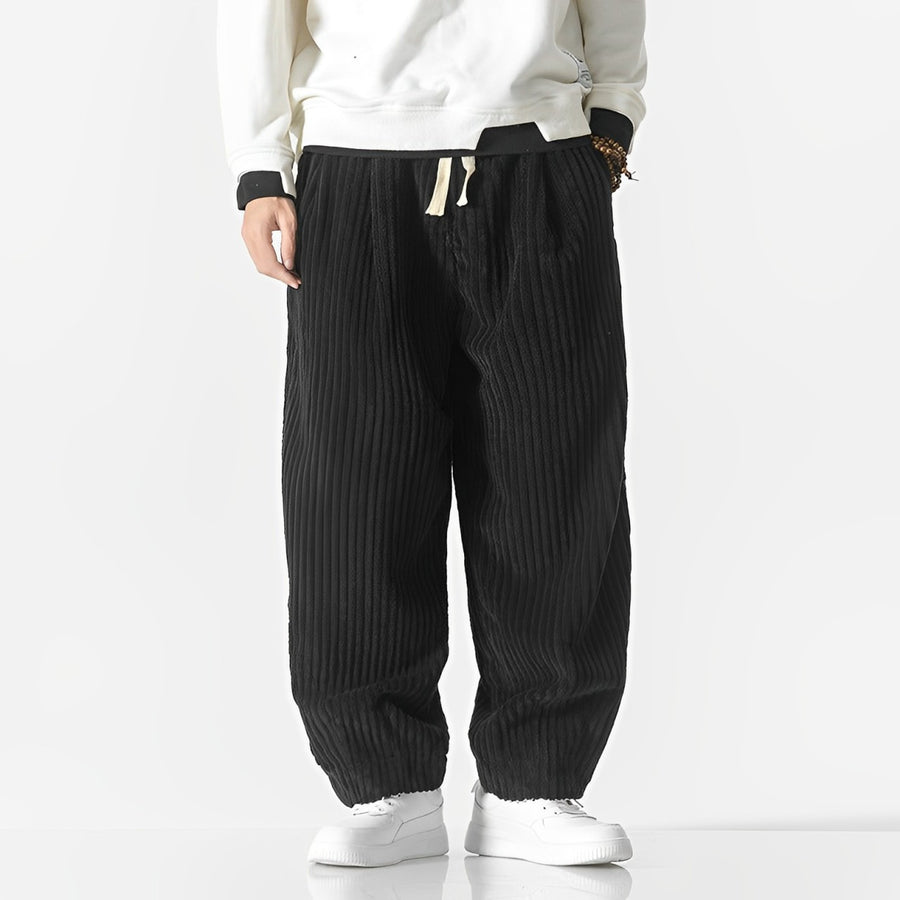
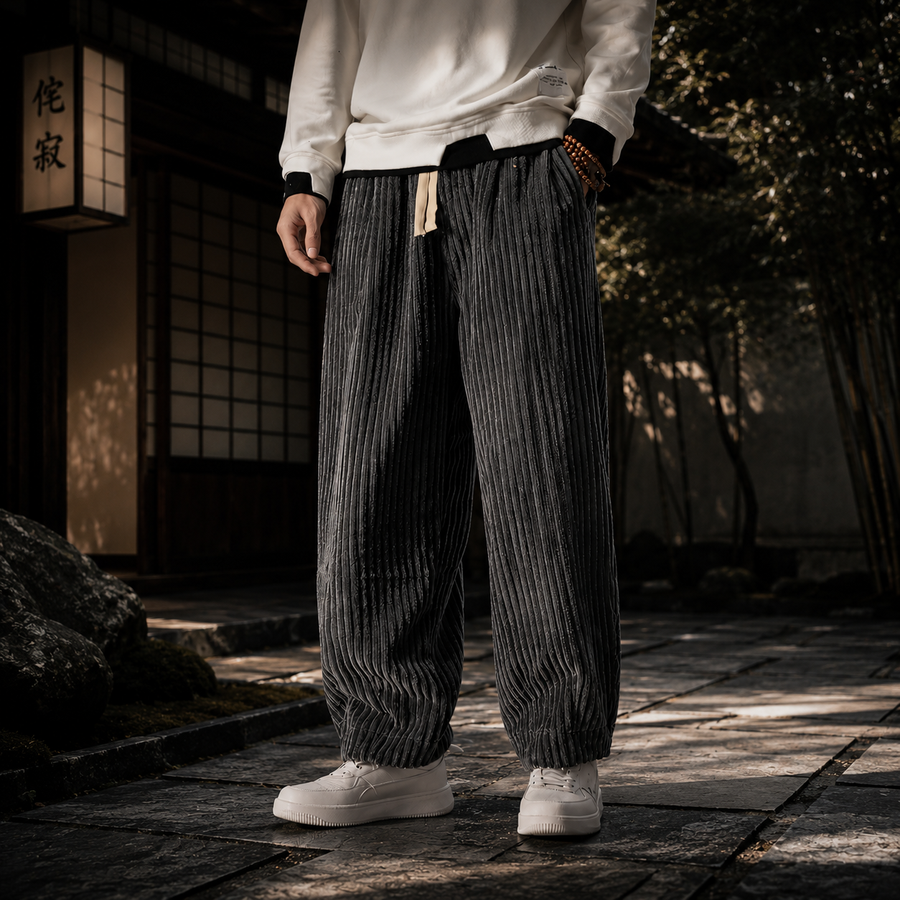
Thin, shiny, floaty fabric is what says "holiday". Woven cotton with a visible texture, such as the slub cotton of the Arashi, or the crinkled cotton-linen of the Sakura, looks deliberate. You can see the weave. That small detail does a lot of grown-up work.
3. Structure on top
This is the most important rule. If the trousers are relaxed, the top half should have some shape:
- a collared shirt, ideally with a stand-up collar like the Kaze, worn untucked;
- a long-sleeve linen shirt like the Miyabi, sleeves turned once;
- a fine knitted crew-neck;
- a quilted or padded jacket in winter.
What to avoid: a loose vest, a tie-dye tee, anything with a slogan. Relaxed on relaxed is where the festival look comes from.
4. Real shoes
Leather loafers, clean white leather trainers, simple dark trainers or desert boots. The cuffed ankle of most Japanese trousers shows off the shoe, so it matters more than usual. Flip-flops and barefoot sandals are the fastest way back to the beach.
5. One relaxed piece at a time
A wide trouser with a fitted shirt works. A fitted trouser with an oversized sweatshirt works. A wide trouser with an oversized sweatshirt and a beanie is a statement only some men want to make. Pick where the volume goes.

Three situations, three outfits
The working day. Black Arashi, white or light-blue shirt with sleeves turned, brown loafers. Nobody will think "harem pants". They will think you look comfortable, which is a compliment at 4pm.
The weekend. Navy Sakura, grey knit, white trainers, a quilted jacket. Park, café, errands, all in one pair.
The evening. Black trousers, a dark shirt with a stand-up collar, dark leather shoes. Calm, a little unusual, and easy to sit in through a long dinner.
What "Japanese" actually adds
Wide, relaxed trousers with drawstring waists and gathered ankles have a long history in Japanese work and everyday clothing, from the samue worn by monks for temple work to the trousers of craftsmen. They were made for people who move, bend and sit all day. That is why they translate so well to an ordinary modern day, and why they don't have to look like a costume. We wrote more about this in Japanese-inspired clothing: why it isn't a costume.
The fit at 40
Comfort is the reason to wear these trousers, so get the size right. Our labels show Asian sizes, about one size smaller than EU. If you wear an L elsewhere, choose XL; between two sizes, take the larger. A drawstring waist adjusts in, never out.
If you want three ready-made outfits per pair, our guide to wearing Japanese pants after 35 has them. Or start with the bestsellers, which is where most men begin.
Start with the calm pair
Free tracked delivery, duties included, 14-day returns. Labels show Asian sizes: take one size up.
Shop the bestsellers